Clinical Data

KEYTRUDA (pembrolizumab) 395 mg solution for injection Prescribing Information [External link] | KEYTRUDA (pembrolizumab) 790 mg solution for injection Prescribing Information [External link] | KEYTRUDA (pembrolizumab) 25 mg/mL Concentrate Solution for Infusion Prescribing Information [External link]
KEYTRUDA SC was studied to evaluate PK non-inferiority to KEYTRUDA IV1,3
MK-3475A-D77 was a randomised, multicentre, open-label, active-controlled, Phase III non-inferiority study comparing KEYTRUDA SC and KEYTRUDA IV, each in combination with chemotherapy1,3,4
Studied in 1L mNSCLC across histologies and PD-L1 TPS expression status1,3,4
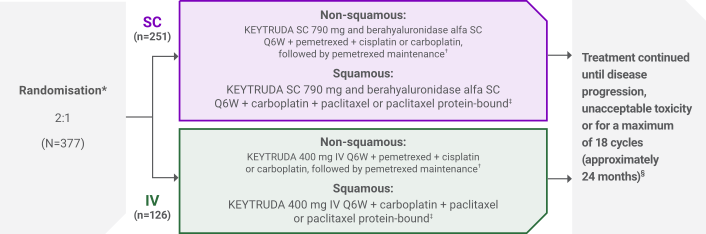
Adapted from Felip E, et al. 2025.
Key patient inclusion criteria
Patients with previously untreated mNSCLC with no EGFR, ALK, or ROS1 genomic tumour aberrations.
Key patient exclusion criteria
Patients were excluded if they had autoimmune disease that required systemic therapy within 2 years of treatment, had a medical condition that required immunosuppression, or had received more than 30 Gy of thoracic radiation within the prior 26 weeks.
Co-primary endpoints (non-inferiority of KEYTRUDA SC vs KEYTRUDA IV) based on:
- Cycle 1 AUC0–6wk
-
Steady state
(cycle 3) Ctrough
Secondary endpoints (based on descriptive analysis):
- ORR¶
- Safety
- PFS¶
- Immunogenicity
- OS
*Randomisation was stratified by ECOG PS (0 vs 1), histology (squamous vs non-squamous), PD-L1 TPS (<50% vs ≥50%) and geographic region (East Asia vs North America/Western Europe/Australia/New Zealand vs Rest of the World).1 †Pemetrexed 500 mg/m2 and a platinum chemotherapy (cisplatin 75 mg/m2 or carboplatin AUC 5 mg/mL/min) intravenously every 3 weeks for 4 cycles, followed by pemetrexed 500 mg/m2 intravenously every 3 weeks.1 ‡Carboplatin AUC 6 mg/mL/min and a taxane (paclitaxel 200 mg/m2 on Day 1 of each 21-day cycle or nab-paclitaxel 100 mg/m2 on Days 1, 8, and 15 of each 21-day cycle) intravenously every 3 weeks for 4 cycles.1 §Treatment with KEYTRUDA SC or KEYTRUDA IV could be reinitiated for subsequent disease progression and administered for up to an additional 9 cycles (approximately 1 year).1 ¶As assessed by BICR using RECIST v1.1.1
Baseline patient characteristics were balanced overall between treatment groups3
| Baseline patient characteristics | KEYTRUDA SC + chemotherapy (n=251) | KEYTRUDA IV + chemotherapy (n=126) |
|---|---|---|
| Median age, years (range) <65 ≥65 | 65.0 (39–87) 119 (47.4) 132 (52.6) | 66.0 (37–83) 57 (45.2) 69 (54.8) |
| Sex, n (%) Male Female | 182 (72.5) 69 (27.5) | 86 (68.3) 40 (31.7) |
| Race, n (%) American Indian or Alaska Native Asian Black or African American Multiple White | 2 (0.8) 74 (29.5) 5 (2.0) 12 (4.8) 158 (62.9) | 4 (3.2) 36 (28.6) 5 (4.0) 3 (2.4) 78 (61.9) |
| ECOG PS, n (%) 0 1 | 89 (35.5) 162 (64.5) | 42 (33.3) 84 (66.7) |
| Histology, n (%) Squamous Non-squamous | 84 (33.5) 167 (66.5) | 43 (34.1) 83 (65.9) |
| PD-L1 expression, n (%) TPS <50% TPS <1% TPS 1–49% TPS ≥50% TPS unknown | 181 (72.1) 101 (40.2) 80 (31.9) 48 (19.1) 22 (8.8) | 91 (72.2) 57 (45.2) 34 (27.0) 25 (19.8) 10 (7.9) |
| Overall stage, n (%) IVA IVB | 141 (56.2) 110 (43.8) | 64 (50.8) 62 (49.2) |
| Smoking status, n (%) Never Former Current | 38 (15.1) 142 (56.6) 71 (28.3) | 23 (18.3) 62 (49.2) 41 (32.5) |
| Other, n (%) Stable brain metastases at baseline | 19 (7.6) | 14 (11.1) |
Adapted from Felip E, et al. 2025.
Pembrolizumab overall drug exposure for KEYTRUDA SC was non-inferior to that of KEYTRUDA IV3
Co-primary endpoints (non-inferiority of KEYTRUDA SC vs KEYTRUDA IV) based on:3*
| Pharmacokinetic measures | Geometric mean ratio† |
|---|---|
| Cycle 1 AUC0-6wks‡ | 1.14 (96% CI: 1.06–1.22); p<0.0001§ |
| Cycle 3 (i.e. steady-state) Ctrough¶ | 1.67 (94% CI: 1.52–1.84); p<0.0001|| |
The non-inferiority margin was prespecified as 0.8
Adapted from Felip E, et al. 2025.
*Six participants in the KEYTRUDA SC arm were excluded from the pharmacokinetics modelling analysis due to clinically meaningful protocol deviation (n=4) and absence of cycle 1 samples for pharmacokinetics analysis (n=2).3 †KEYTRUDA SC + chemotherapy vs KEYTRUDA IV + chemotherapy.3 ‡AUC (area under the curve) = the total amount of the drug reaching the systemic circulation. ¶Ctrough (trough concentration) = lowest concentration of drug in the blood. §The one-sided p value non-inferiority boundary is 0.02 for the analysis of cycle 1 AUC0–6wk.3 ||The one-sided p value non-inferiority boundary is 0.03 for the analysis of cycle 3 (steady state) Ctrough.3
Efficacy endpoints were comparable between KEYTRUDA SC and KEYTRUDA IV3,4
Efficacy was a descriptive analysis and was not powered to demonstrate statistical significance.3
PFS (median follow up 9.6 months)*3
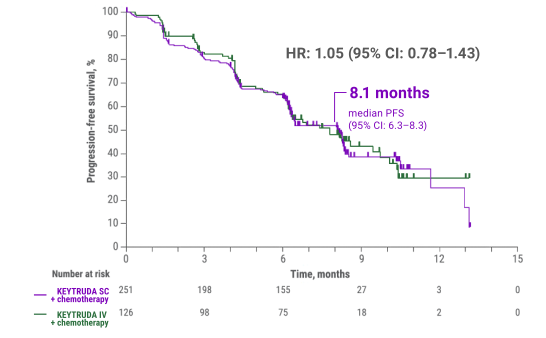
Adapted from Felip E, et al. 2025.
ORR3,4
| Secondary endpoints | KEYTRUDA SC + chemotherapy (n=251) | KEYTRUDA IV + chemotherapy (n=126) |
|---|---|---|
| ORR*† | 45.4% (95% CI: 39.1–51.8) | 42.1% (95% CI: 33.3–51.2) |
| Complete response | 3.2% | 1.6% |
| Partial response | 42.2% | 40.5% |
| Difference in ORR‡ | 3.5% (95% CI: -7.0–13.7) | 3.5% (95% CI: -7.0–13.7) |
OS event rate (was not mature)3
| OS (not yet mature) | KEYTRUDA SC + chemotherapy (n=251) | KEYTRUDA IV + chemotherapy (n=126) |
|---|---|---|
| OS (event rate) | 61 deaths; 24.3% | 37 deaths; 29.4% |
| Hazard ratio | 0.81 (95% CI: 0.53–1.22) | |
Data cutoff: 12 July 2024.
*As assessed by BICR using RECIST v1.1. The tail end of the Kaplan-Meier curve should be interpreted with caution due to factors such as the number of censored events and a lower number of patients at this time.3 †Based on patients with a best overall response as confirmed complete or partial response.3 ‡KEYTRUDA SC arm minus KEYTRUDA IV arm; based on stratified Miettinen and Nurminen method.3
The immunogenicity profile of KEYTRUDA SC was consistent with the known immunogenicity profile of KEYTRUDA IV3
Immunogenicity3
| Observed incidence of ADAs, n (%)* | KEYTRUDA SC + chemotherapy (n=211) | KEYTRUDA IV + chemotherapy (n=114) |
|---|---|---|
| Developed anti-pembrolizumab antibodies | 3 (1.4) | 1 (0.9) |
| Developed neutralising antibodies against pembrolizumab | 1 (0.5) | 0 (0) |
| Observed incidence of ADAs, n (%)*† | KEYTRUDA SC + chemotherapy (n=194) | KEYTRUDA IV + chemotherapy |
|---|---|---|
| Developed anti-berahyaluronidase alfa antibodies | 3 (1.5) | NA |
Adapted from Felip E, et al. 2025.
For participants who were ADA positive, the pembrolizumab exposure was comparable to that for participants who were ADA negative and treated by the same route of administration.3
The median duration of treatment with KEYTRUDA SC was 6.9 months (range: 1 day – 1 year).3
*Because of the low occurrence of anti-pembrolizumab or anti-berahyaluronidase antibodies, the effect of these antibodies on the pharmacokinetics, safety and effectiveness of KEYTRUDA SC is unknown.3 †No analysis of neutralising antibodies was performed for berahyaluronidase alfa ADA-positive samples.3
The safety profile of KEYTRUDA SC was consistent with the known safety profile of KEYTRUDA IV, with an addition of injection site reactions3
Safety summary3
Please refer to the individual product SmPC for full details on AEs and the management of patients on KEYTRUDA or KEYTRUDA SC.
KEYTRUDA Summary of Product Characteristics [External link]
KEYTRUDA 395 mg solution for injection Summary of Product Characteristics [External link]
KEYTRUDA 790 mg solution for injection Summary of Product Characteristics [External link]
| Participants, n (%)* | KEYTRUDA SC + chemotherapy (n=251) | KEYTRUDA IV + chemotherapy (n=126) |
|---|---|---|
| First-line treatment: median time on treatment (range) | 6.87 months (1 day – 13.2 months) | 6.21 months (1 day – 15.9 months) |
| AEs, ≥1 | 249 (99.2) | 123 (97.6) |
| TRAEs† | 226 (90.0) | 121 (96.0) |
| Grade 3–5 | 118 (47.0) | 60 (47.6) |
| Serious | 53 (21.1) | 25 (19.8) |
| Discontinuation of any treatment due to a TRAE† | 44 (17.5) | 19 (15.1) |
| Discontinued KEYTRUDA SC or KEYTRUDA IV | 21 (8.4) | 11 (8.7) |
| Discontinued chemotherapy | 38 (15.1) | 15 (11.9) |
| Deaths due to TRAEs† | 9 (3.6)‡ | 3 (2.4)§ |
Adapted from Felip E, et al. 2025.
- Similar proportions of patients in the two treatment arms experienced one or more serious AEs. The most frequent serious AEs included pneumonia, febrile neutropenia, thrombocytopenia, neutropenia, anaemia and pulmonary embolism.3
- In total, 38 patients in the study had an AE that resulted in death, including 26 (10.4%) patients in the KEYTRUDA SC arm and 12 (9.5%) patients in the KEYTRUDA IV arm.†3
All injection site reactions were Grade 13
- Injection-site reactions occurred in 2.4% (6/251) of patients receiving KEYTRUDA SC¶.
- The median time to onset of the first injection-site AEs from the most recent dose administration was 2.0 days (range: 1–2 days).
- The median duration of the first event of injection-site AE was 5.5 days (range: 2–20 days).
- No participant discontinued treatment in the KEYTRUDA SC arm due to injection-site AEs.
Data cutoff: 12 July 2024. Median study follow-up: 9.6 months (range: 6.24–16.39 months). The median time on study treatment was 6.87 months (range: 1 day – 13.2 months) in the KEYTRUDA SC arm and 6.21 months (range: 1 day – 15.9 months) in the KEYTRUDA IV arm.3
*Participants are counted a single time for each applicable row and column. Non-serious AEs up to 30 days after the last dose and serious AEs up to 90 days after the last dose are included.3 †Determined by the investigator to be related to treatment.3 ‡Includes febrile neutropenia (n=3), neutropenic colitis (n=1), neutropenic sepsis (n=1), parotitis (n=1), pneumonia (n=1), septic shock (n=1) and pneumonitis (n=1).3 §Includes septic shock (n=2) and multiple organ dysfunction syndrome (n=1).3 ¶The reported injection-site reactions included terms of injection-site reaction (0.8%), injection-site erythema (0.4%), injection-site haemorrhage (0.4%), injection-site induration (0.4%) and injection-site pain (0.4%).3
The incidence, type and severity of imAEs were generally consistent between treatment groups4
imAEs occurring in >0% of patients in either treatment group4
| Participants, n (%)* | KEYTRUDA SC + chemotherapy (n=251) | KEYTRUDA IV + chemotherapy (n=126) | |||
|---|---|---|---|---|---|
| One or more imAEs* | 78 (31.1) | 33 (26.2) | |||
| Type of events†, by category | Any grade | Grade 3–5 | Any grade | Grade 3–5 | |
| Hypothyroidism | 35 (13.9) | 0 (0) | 15 (11.9) | 0 (0) | |
| Hyperthyroidism | 20 (8.0) | 0 (0) | 6 (4.8) | 0 (0) | |
| Pneumonitis | 13 (5.2) | 6 (2.4) | 1 (0.8) | 0 (0) | |
| Infusion reactions | 8 (3.2) | 0 (0) | 3 (2.4) | 0 (0) | |
| Gastritis | 7 (2.8) | 2 (0.8) | 1 (0.8) | 0 (0) | |
| Adrenal insufficiency | 5 (2.0) | 1 (0.4) | 3 (2.4) | 3 (2.4) | |
| Severe skin reactions | 4 (1.6) | 4 (1.6) | 3 (2.4) | 2 (1.6) | |
| Colitis | 3 (1.2) | 2 (0.8) | 3 (2.4) | 1 (0.8) | |
| Thyroiditis | 1 (0.4) | 0 (0) | 1 (0.8) | 0 (0) | |
| Hepatitis | 1 (0.4) | 0 (0) | 0 (0) | 0 (0) | |
| Myositis | 1 (0.4) | 0 (0) | 0 (0) | 0 (0) | |
| Type 1 diabetes mellitus | 1 (0.4) | 1 (0.4) | 0 (0) | 0 (0) | |
| Nephritis | 0 (0) | 0 (0) | 2 (1.6) | 0 (0) | |
| Hypophysitis | 0 (0) | 0 (0) | 1 (0.8) | 1 (0.8) | |
Adapted from Felip E, et al. 2025.
Recommended dose modifications are the same for KEYTRUDA SC and KEYTRUDA IV1,2
No dose reductions are recommended for KEYTRUDA SC. Withhold or discontinue KEYTRUDA SC to manage adverse reactions. Please refer to the individual product’s SmPC for full details about dosing modification, treatment monitoring and AE management.
KEYTRUDA Summary of Product Characteristics [External link]
KEYTRUDA 395 mg solution for injection Summary of Product Characteristics [External link]
KEYTRUDA 790 mg solution for injection Summary of Product Characteristics [External link]
Data cutoff: 12 July 2024. Median study follow-up: 9.6 months (range: 6.24–16.39 months). The median time on study treatment was 6.87 months (range: 1 day – 13.2 months) in the KEYTRUDA SC arm and 6.21 months (range: 1 day – 15.9 months) in the KEYTRUDA IV arm.3
*imAEs and infusion reactions are based on a list of preferred terms specified by the sponsor intended to capture the known risks of KEYTRUDA and are considered regardless of attribution to trial treatment by the investigator.4 †Patients are counted a single time for each applicable row and column.4
Patients preferred KEYTRUDA SC (pembrolizumab) over KEYTRUDA IV5
MK3475-A-F11: A Phase II crossover study of participant-reported preference for KEYTRUDA SC or KEYTRUDA IV5
Participants
-
Age ≥18 years
-
Resected Stage IIB, IIC, or III melanoma
or -
Intermediate-high or high risk resected RCC
or - Newly diagnosed, untreated Stage IV NSCLC with PD-L1 TPS ≥50%
-
Resected Stage IIB, IIC, or III melanoma
- ECOG PS 0 or 1
- No pneumonitis or interstitial lung disease
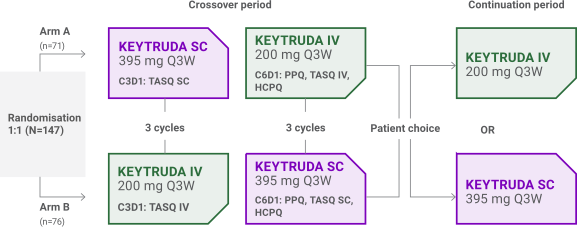
Adapted from Casarini A, et al. 2025.
Statistical analysis
- Participants received up to a total of 17 cycles of treatment for melanoma or RCC, and up to a total of 35 cycles of treatment for NSCLC
- The analysis population for participant preference included all randomised participants who received 3 cycles of KEYTRUDA SC and 3 cycles of KEYTRUDA IV during the crossover period and completed the PPQ after the administration of study treatment on Day 1 of Cycle 6 (N=118)
- The safety analysis population included all randomised participants who received at least 1 dose of study treatment (N=147)
Primary endpoint
- Participant preference for KEYTRUDA SC or KEYTRUDA IV (PPQ question 1)
Secondary endpoints
- Reasons for preference (PPQ question 3)
- Participant satisfaction with route of administration (TASQ-SC/IV)
- Participant choice of administration for continuation period
- HCP preference for route of administration (HCPQ)
- Safety and tolerability
Randomisation was stratified by ECOG PS and tumour type; KEYTRUDA SC is KEYTRUDA at 165 mg/mL with berahyaluronidase alfa at 2000 U/mL (injection volume ~2.4 mL).5
C3D1, cycle 3 Day 1; C6D1, cycle 6 Day 1; ECOG PS, Eastern Cooperative Oncology Group performance status; HCP, healthcare professional; HCPQ, HCP Preference Questionnaire; IV, intravenous; NSCLC, non-small cell lung cancer; PD-L1, programmed cell death-ligand 1; PPQ, patient preference questionnaire; Q3W, every 3 weeks; RCC, renal cell carcinoma; SC, subcutaneous; TASQ, Therapy Administration Satisfaction Questionnaire; TPS, tumour proportion score.
MK-3475A-F11: Participant preference for route of administration (SC or IV)5
65% of patients in both arms preferred KEYTRUDA SC over KEYTRUDA IV
(95% CI: 56%–74%)
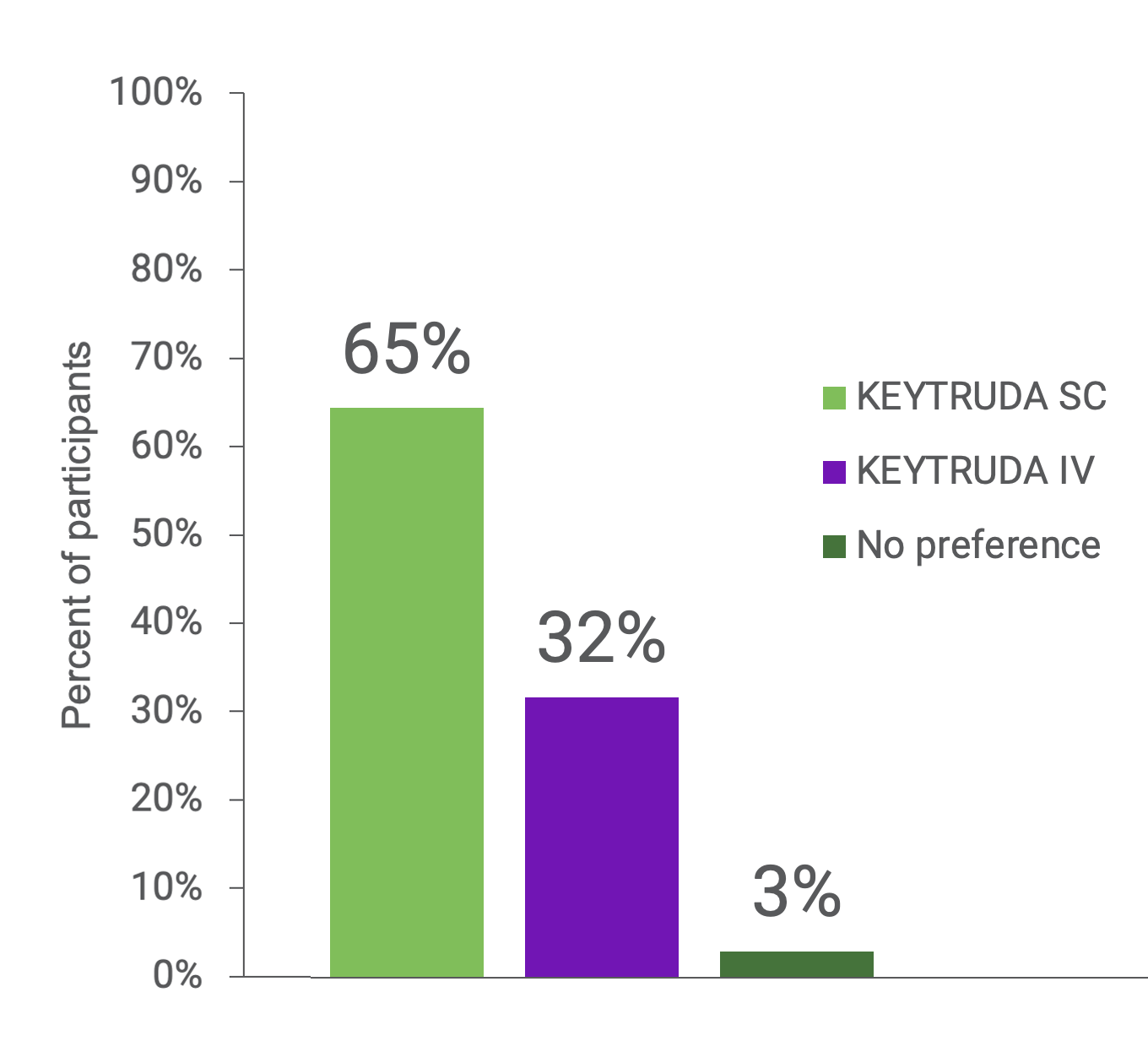
68% of patients chose to continue with KEYTRUDA SC vs 32% with KEYTRUDA IV after Cycle 6 in the treatment continuation period
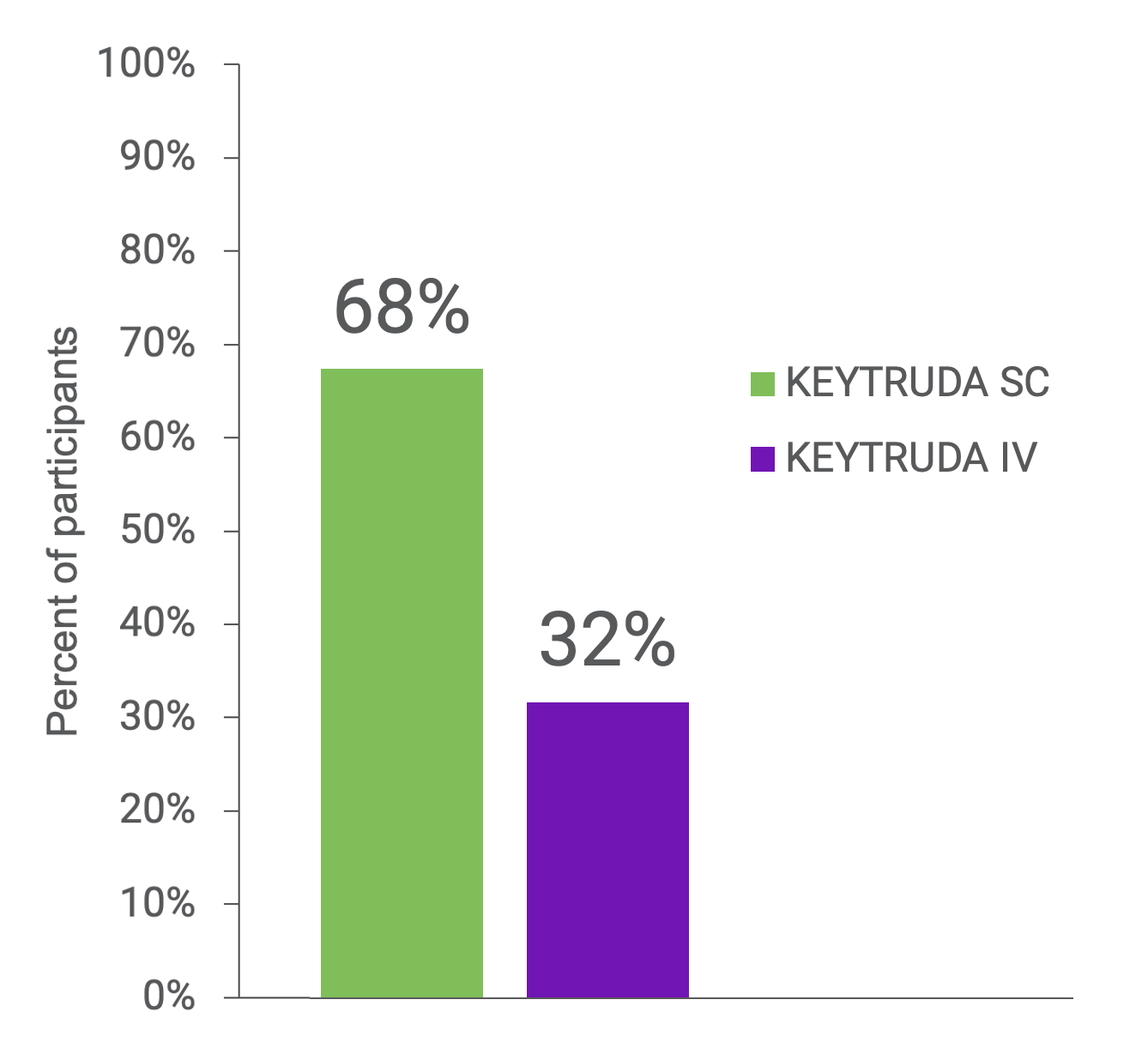
Adapted from Casarini A, et al. ESMO 2025.
Data cut-off: 9 April 2025. Median follow-up: 10.8 months (range 4.0–14.8).
~2/3 of patients and HCPs prefer KEYTRUDA SC over KEYTRUDA IV5
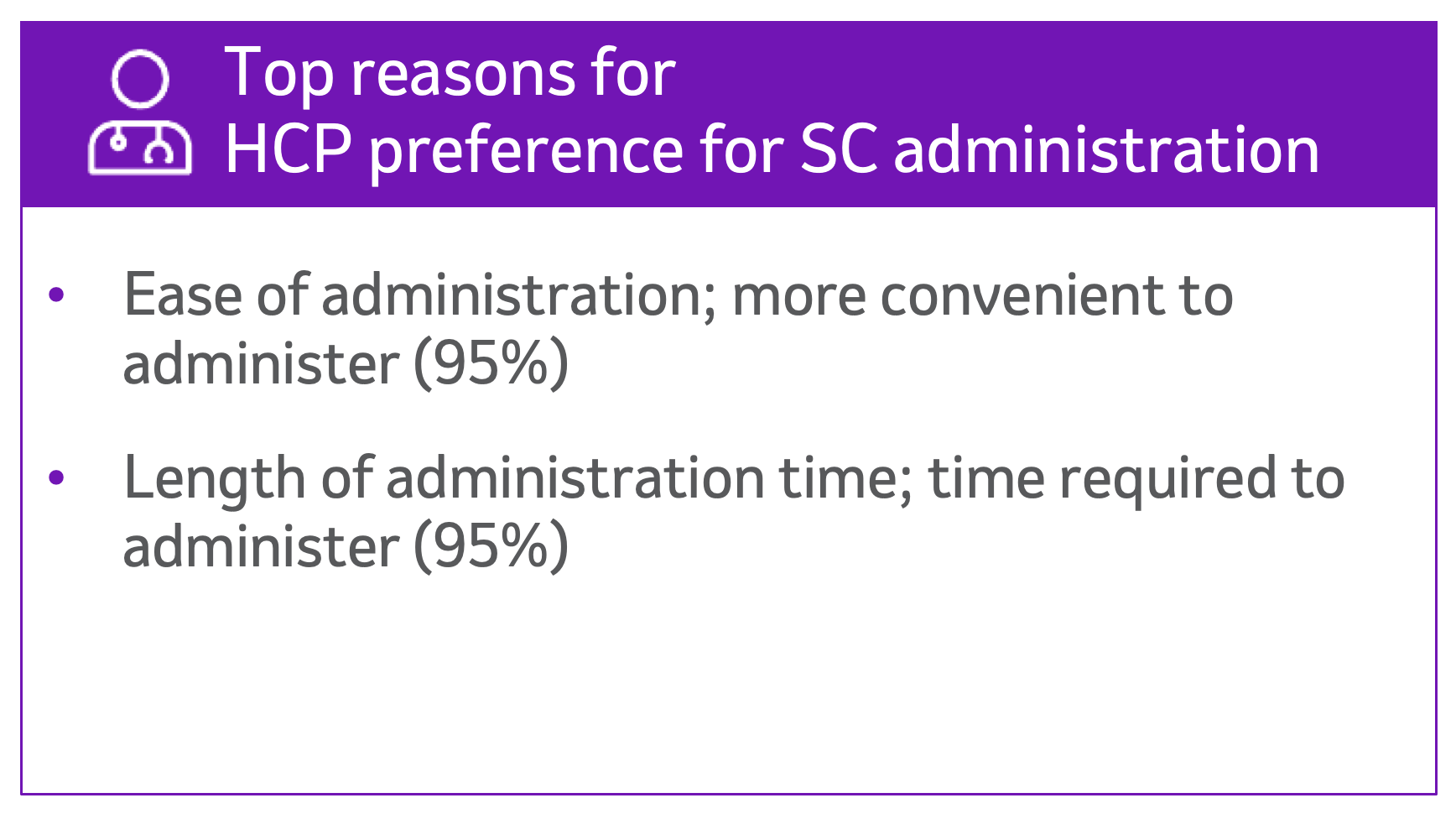
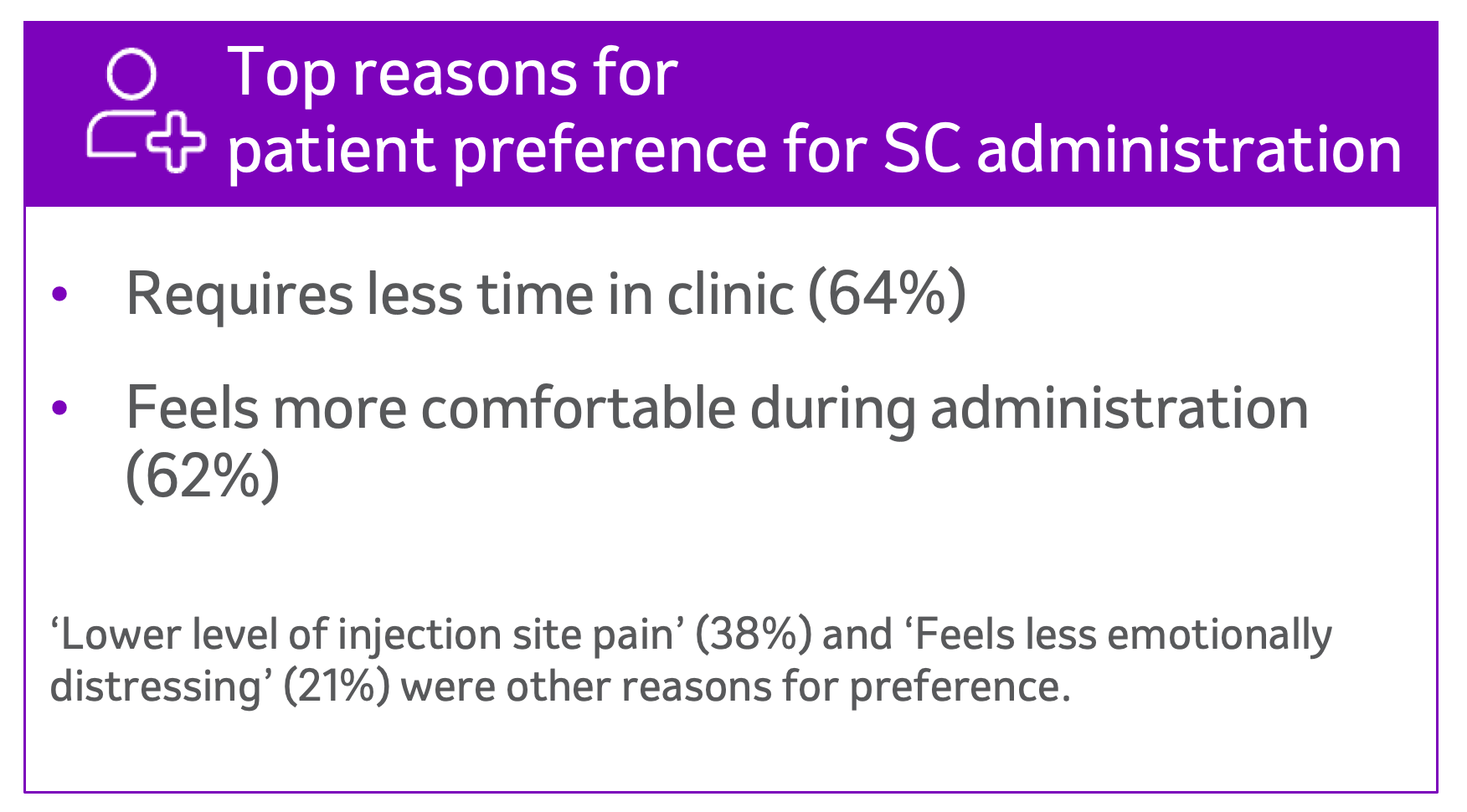
More patients chose to continue with KEYTRUDA SC than KEYTRUDA IV (68% vs 32%) after Cycle 6 in the treatment continuation period
MK3475A-F11: Safety profile5
Safety findings were comparable within arms pre- and post-switch5
Please refer to the individual product SmPC for full details on AEs and the management of patients on KEYTRUDA or KEYTRUDA SC.
| Participants, n (%)* | Arm A (SC→IV) Cycles 1–3 (n=71) | Arm A (SC→IV) Cycles 4–6 (n=65) | Arm B (IV→SC) Cycles 1–3 (n=76) | Arm B (IV→SC) Cycles 4–6 (n=70) |
|---|---|---|---|---|
| With one or more TRAEs | 40 (56) | 21 (32) | 36 (47) | 42 (60) |
| Grade 3–5 | 1 (1) | 2 (3) | 5 (7) | 3 (4) |
| Serious | 1 (1) | 1 (2) | 2 (3) | 2 (3) |
| Died | 0 | 0 | 0 | 0 |
| Discontinued treatment | 1 (1) | 1 (2) | 1 (1) | 1 (1) |
| Discontinued treatment due to serious TRAE | 1 (1) | 1 (2) | 0 | 1 (1) |
Adapted from Casarini A, et al. ESMO 2025.
- Injection site AEs during KEYTRUDA SC administration cycles of the crossover period occurred in 9 (13%; Arm A) and 11 (16%; Arm B) participants
- The most frequent injection site AE reported overall was injection site pain (n=10; 7%)
- All injection site AEs were Grade 1, except for two Grade 2 AEs in Arm B (injection site pain and injection site reaction)
Data cut-off: 9 April 2025. Median follow-up: 10.8 months (range: 4.0–14.8).
*Determined by the investigator to be related to study treatment.
MK3475A-F11: Conclusions5
Results of the study MK-3475A-F11 demonstrate that both patients and HCPs prefer KEYTRUDA SC injections over KEYTRUDA IV infusions5
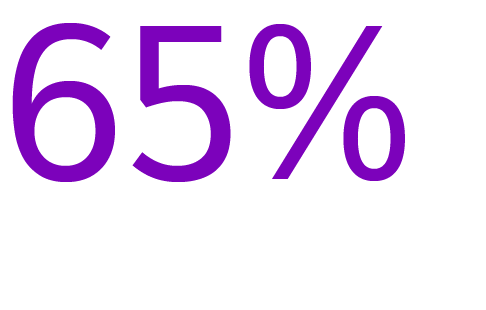
65% of patients preferred KEYTRUDA SC to KEYTRUDA IV (n=118)
- Safety findings were comparable within arms pre- and post-switching, indicating the safety of switching from one route of administration to the other.
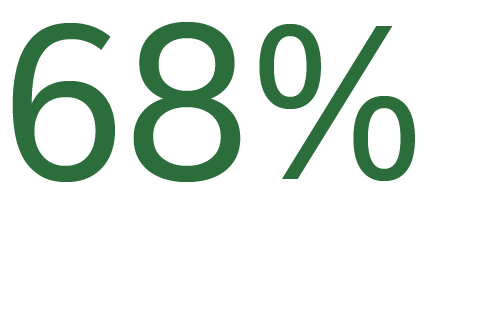
68% of patients chose to continue with KEYTRUDA SC rather than KEYTRUDA IV after Cycle 6

Top reasons for patient preference for KEYTRUDA SC administration were:
- ‘Requires less time in clinic’ (64%) and ‘Feels more comfortable during administration’ (62%).
- ‘Lower level of injection-site pain’ (38%) and ‘Feels less emotionally distressing’ (21%) were other reasons for preference.
KEYTRUDA SC is licensed for use in adult patients across most KEYTRUDA IV indications, whether alone or in combination with other therapies.1,2 One such indication is: KEYTRUDA IV and KEYTRUDA SC, in combination with pemetrexed and platinum chemotherapy, are each indicated for the first-line treatment of metastatic non-squamous non-small cell lung carcinoma in adults whose tumours have no EGFR- or ALK-positive mutations.1,2
Please consult the SmPC for the full list of indications and further information to minimise the risks associated with the use of the medicine before making any prescribing decisions.
KEYTRUDA SC is for adult use only. The safety and efficacy of KEYTRUDA SC in children below 18 years of age have not been established.1
The approved indications for KEYTRUDA SC have been established based on the MK-3475A-D77 study, which demonstrated non-inferior pharmacokinetics, and comparable efficacy and safety profiles between KEYTRUDA SC and KEYTRUDA.1
Please refer to individual product SmPCs for full information about dosing, preparation and administration.
Abbreviations
1L = first-line; ADA, anti-drug antibody; AE = adverse event; ALK = anaplastic lymphoma kinase; AUC, area under the curve; BICR = blinded independent central review; Ctrough = trough concentration; ECOG PS = Eastern Cooperative Oncology Group performance status; EGFR = epidermal growth factor receptor; Gy = gray; imAE = immune-mediated adverse event; IV = intravenous; mNSCLC = metastatic non-small cell lung carcinoma; nab-paclitaxel = paclitaxel protein-bound; ORR = objective response rate; OS = overall survival; PD-L1 = programmed death-ligand 1; PFS = progression-free survival; PK = pharmacokinetic; Q6W = every 6 weeks; RECIST = Response Evaluation Criteria In Solid Tumours; ROS1 = ROS proto-oncogene 1 = receptor tyrosine kinase; SmPC = Summary of Product Characteristics; TPS = tumour proportion score; TRAE = treatment-related adverse event.
References
- KEYTRUDA (pembrolizumab) Solution for Injection Summary of Product Characteristics (395 mg and 790mg).
- KEYTRUDA (pembrolizumab) 25 mg/mL Concentrate Solution for Infusion Summary of Product Characteristics.
- Felip E, et al. Ann Oncol 2025;36:775–785.
- Felip E, et al. Ann Oncol 2025;36:775–785. Supplementary data.
- Casarini IA, et al. A Phase 2 study of participant-reported preference for pembrolizumab administered subcutaneously or intravenously. ESMO. 17–21 October 2025. Berlin, Germany. Poster: 3145P.
Supporting documentation
KEYTRUDA (pembrolizumab) 395 mg solution for injection Prescribing Information [External link]
KEYTRUDA (pembrolizumab) 790 mg solution for injection Prescribing Information [External link]
KEYTRUDA (pembrolizumab) 25 mg/mL Concentrate Solution for Infusion Prescribing Information [External link]
By clicking the link above you will leave the MSD Connect website and be taken to the emc PI portal website.
